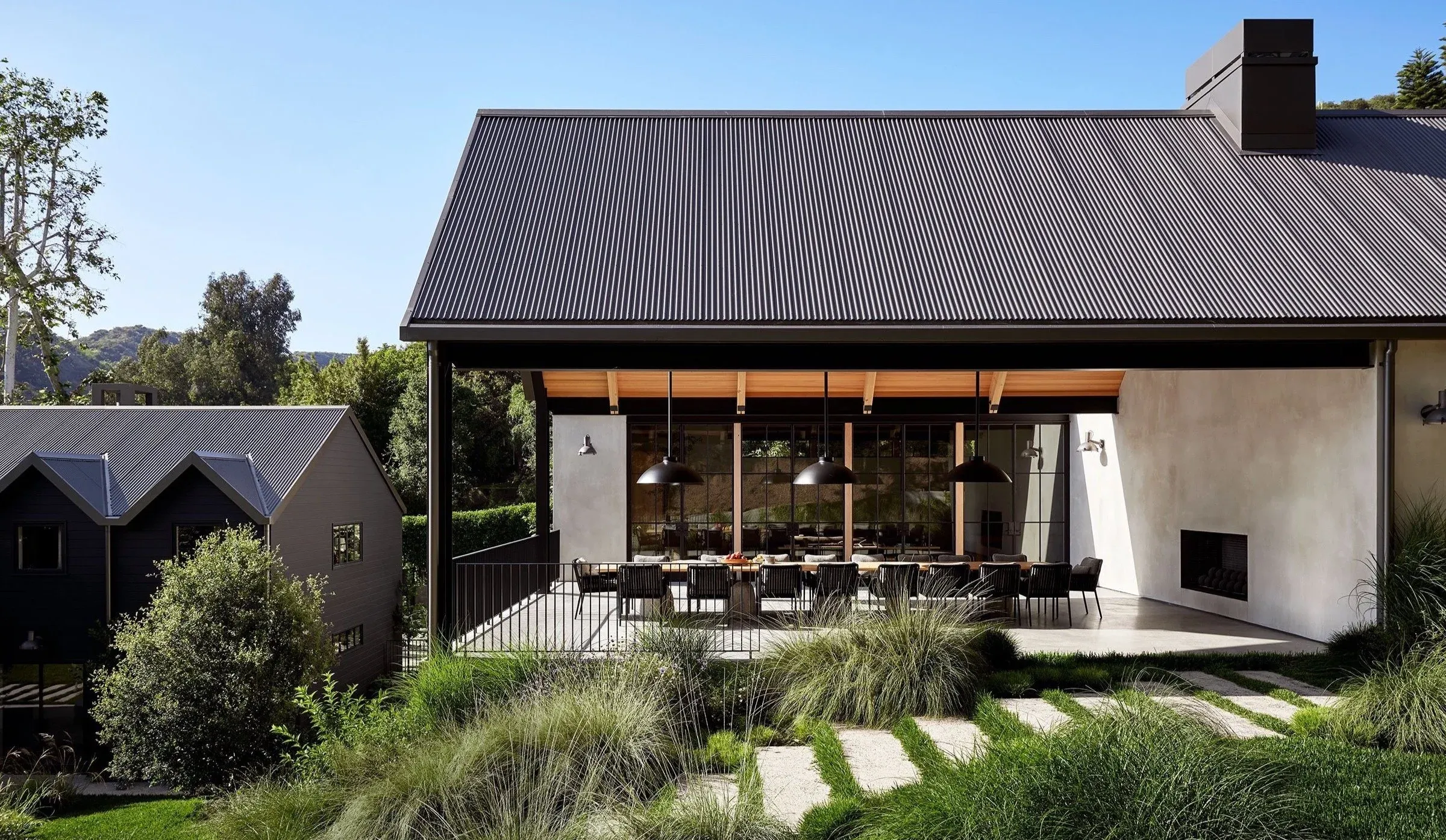
1 Storey storey · Barn
Barn
95m²130m²175m²
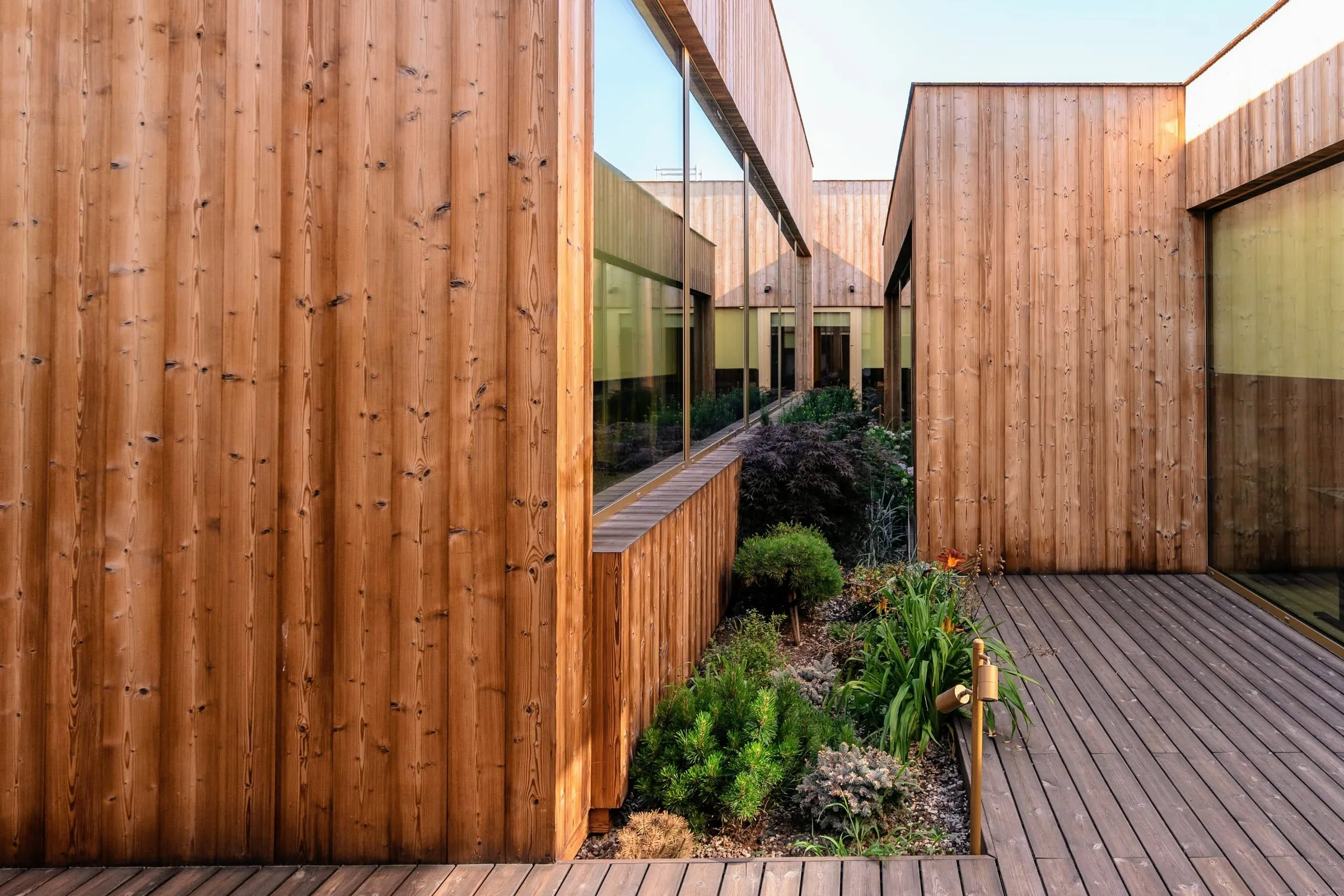
Living with CLT
It's a question most Australians have asked at some point.
Why is it 35°C outside and my house feels like an oven?
Or why do I need a jumper indoors during winter when I've already closed every window?
The truth is that many Australian homes are surprisingly poor at controlling indoor temperatures.
Despite advances in technology and building materials, a large percentage of homes still rely heavily on air conditioning and heating to remain comfortable.
At ArborHaus, we believe there is a better way.
Australians often blame the climate.
"It's just hot here."
"It's just cold in winter."
But if you've ever stayed in a well-designed high-performance home, you'll quickly realise the weather isn't the real issue.
The problem is how the home responds to the weather.
Many houses allow heat to flow freely through walls, roofs, windows and gaps in the building envelope. During summer, unwanted heat enters the home. During winter, valuable warmth escapes.
The result is a constant battle against the outdoor environment.
Typical Sources of Heat Loss & Heat Gain
| Building Element | Impact on Comfort |
|---|---|
| Roof | Largest source of unwanted heat gain |
| Windows | Major contributor to overheating and heat loss |
| Walls | Transfer heat throughout the day |
| Air leaks | Create drafts and temperature swings |
| Poor ventilation | Traps heat and stale air |
Imagine leaving a window slightly open all year round.
That's effectively what happens in many homes.
Small gaps around windows, doors, wall penetrations and construction joints allow air to move in and out of the building.
Individually, these gaps seem insignificant.
Combined together, they can have a huge impact on comfort and energy efficiency.
This uncontrolled air movement is one of the biggest reasons homes struggle to maintain consistent indoor temperatures.

Most people think insulation is the answer.
While insulation is incredibly important, it's only one part of the equation.
A home can have excellent insulation but still perform poorly if it isn't airtight.
Think of insulation like a warm jacket.
A thick jacket works well until you leave the zip open.
The same principle applies to buildings.
The best-performing homes combine insulation, airtight construction, quality windows and controlled ventilation to create a complete system.
Many homeowners have become accustomed to running heating and cooling systems constantly.
But what if your home naturally stayed comfortable for most of the year?
A well-designed high-performance home can significantly reduce temperature swings between day and night.
Rooms feel more consistent, drafts are reduced and indoor comfort improves dramatically.
Rather than relying on mechanical systems to fix a poorly performing building, the building itself does most of the work.
A comfortable home isn't just about temperature.
It's about how the space feels.
No cold spots near windows.
No overheating upstairs.
No rooms that are impossible to keep comfortable.
Just a stable, pleasant environment throughout the year.
It's one of those things that is difficult to appreciate until you experience it for yourself.
At ArborHaus, every decision we make is focused on long-term performance.
From CLT construction and insulation systems to airtight detailing and ventilation strategies, we design homes that work with the environment rather than fighting against it.
The result is a healthier, more comfortable and more energy-efficient home.
Because your home shouldn't feel like a greenhouse in summer and a fridge in winter.
It should simply feel comfortable.
Something goes here
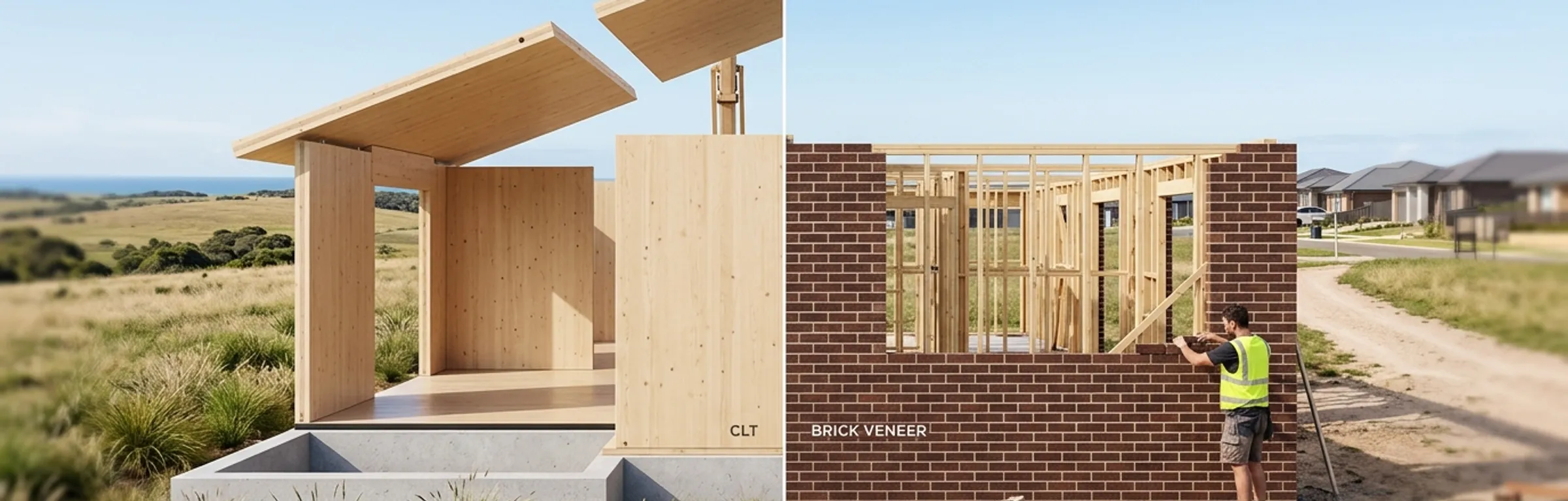
The traditional way vs. the high-performance future: Why CLT is challenging the status quo of Australian home building.